Mortgage with a Spanish bank: how do you choose the right one?
A Spanish mortgage is almost always arranged through a Spanish bank, not your Dutch mortgage provider. Which Spanish bank suits your application? Four or five banks are truly active in the non-resident market: Santander, BBVA, Sabadell, CaixaBank, and Bankinter. They differ in interest rate surcharges, equity requirements, language support, and how quickly they process foreign applications. We assess the differences and explain how to make the right choice.
Table of contents
- Why a Spanish bank, not a Dutch one?
- Which Spanish banks grant mortgages to non-residents?
- Differences in interest surcharge for non-residents
- Differences in equity requirements
- Language support and communication
- Lead time and bureaucracy
- How do we choose the right bank for you?
- What if the bank rejects your application?
- Frequently Asked Questions
- Source attribution
- Personal advice
Why a Spanish bank, not a Dutch one?
In principle, Dutch banks do not finance real estate abroad. Therefore, for a property in Spain, you must turn to a Spanish mortgage lender. This has a few consequences:
Interest rates work differently. Spanish mortgages are often pegged to the Euribor with a margin, whereas the Dutch are accustomed to fixed-rate periods.
The bureaucracy is different. Spanish banks require a different type of document and have different processing times.
The legal proceedings are handled through a Spanish notary, with the bank as a direct party.
Specific conditions apply to you as a non-resident, such as a higher equity requirement.

Which Spanish banks grant mortgages to non-residents?
Not every Spanish bank is suitable for a foreign buyer. Four or five are truly active in this market:
Santander. The largest bank in Spain, with international experience and its own non-resident department. Communication in English is often easy to arrange.
BBVA. Second largest, strong position in expat financing. Has a dedicated team for non-residents and relatively structured processes.
Sabadell. Strongly represented in the Costa regions, particularly on the Costa Blanca and Costa del Sol. Prefers working with foreign buyers in the holiday home segment.
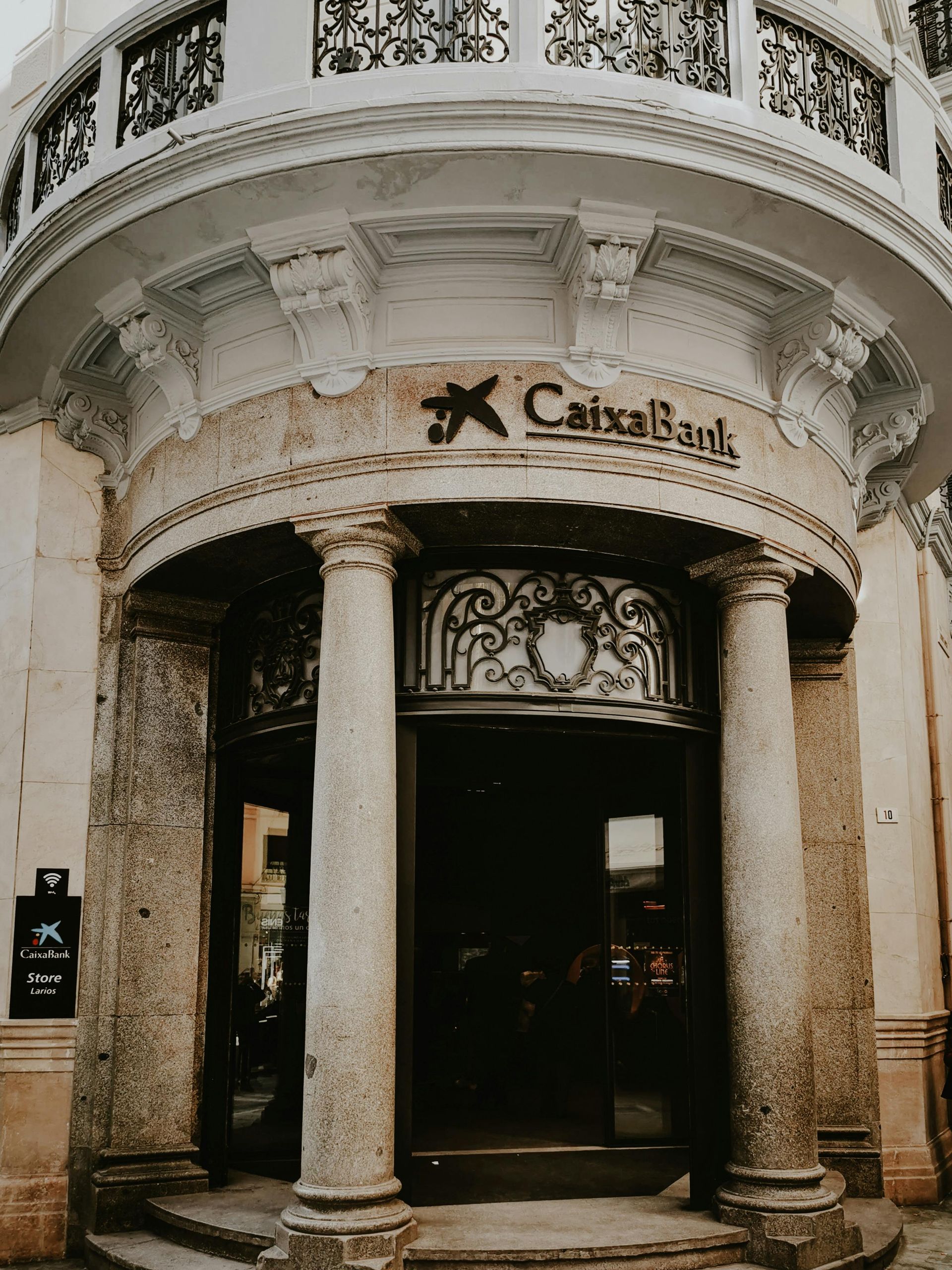
CaixaBank. Major in Catalonia and on the Costa Brava. Communication may be partly in Catalan, and some regional branches prefer to work with locally present customers.
Bankinter. Smaller than the other four, but more personal. Sometimes slightly more flexible for specific profiles that don't pass standard checks at larger banks.
Other banks (Banco Popular, Bankia, Deutsche Bank Spain) are less active in the non-resident market and rarely offer mortgages to foreign buyers.
Differences in interest surcharge for non-residents
The interest you pay typically consists of two parts: the Euribor (the base rate at which European banks lend to each other) plus a margin from the bank itself. For non-residents, this margin is higher than for Spanish residents. How much higher varies by bank and profile.
What determines the amount of your storage:
- The country where you work and pay taxes
- Your income and assets
- The purchase price and region of the home
- Whether you take out other products in addition to the mortgage (account, insurance)
Some banks offer a discount on the surcharge if you open a Spanish account or take out life insurance with them. With others, the surcharge is directly linked to your profile.
Differences in equity requirements
For a non-resident mortgage, Spanish banks typically require thirty to forty percent equity, plus buyer's costs (notary, taxes, registration). The exact requirement varies by bank and by type of property.
What we see in practice:
- For a primary residence in Spain (where you spend a lot of time), the requirement is lower than for a holiday home.
- For an apartment in a popular coastal region, the requirements are often slightly higher than for a home in a city center.
- For private banking clients with substantial assets, the requirement can be substantially lower.
Language support and communication
Niet elke Spaanse bank heeft Engels- of Nederlandstalige contacten op kantoor. Voor wie geen vlot Spaans spreekt, is dit een belangrijke factor.
Santander and BBVA have specific non-resident departments with English-speaking staff. Sabadell often has staff at Costa locations who assist foreign clients. CaixaBank operates partly in Catalan, particularly in the Catalonia region, which requires extra attention. Bankinter has smaller teams but works in a more personal manner, often in English.
We guide you fully in Dutch and handle communication with the Spanish bank for you. You do not need to speak Spanish yourself to take out a Spanish mortgage.

Lead time and bureaucracy
Spanish banks are generally more bureaucratic than Dutch ones. Documents must be submitted complete and in the correct format. A missing piece of paper can delay the process by weeks.
Lead time direction per bank:
- A structured bank such as BBVA or Santander uses fixed processes; lead time is predictable.
- Sabadell and CaixaBank are organized more locally; processing time depends on the regional office.
- Bankinter often works faster thanks to personal attention, but volume is limited.
Important: during the high season (April to July), all banks become busier. Anyone applying for a mortgage in May for a purchase in June should expect a tight schedule. It is better to start well in advance.
How do we choose the right bank for you?
At Spaanse Hypotheek, we have direct contacts at Santander, BBVA, Sabadell, CaixaBank, and Bankinter. Based on your profile (income, assets, country of residence, region in Spain, type of property, purpose of the property), we determine which two or three banks are the most promising.
We approach those banks in parallel and request quotes. This way, you see comparable terms side by side and can make an informed choice. No time wasted on banks that wouldn't accept your profile anyway.
We go through the mortgage process together, from initial orientation to signing at the notary.
What if the bank rejects your application?
A rejection by one bank does not mean that no bank will accept you. Other banks apply different risk criteria. A director-major shareholder might be assessed more strictly by bank A than by bank B. A retired person with assets is more likely to turn to Bankinter than to Santander.
What we do in practice after a rejection:
- Analysis of the reason for rejection.
- Adjust the file where necessary (additional security, different type of home, different period).
- Approaching another bank that matches the adjusted profile.
Often, the solution lies not in finding a better bank, but in presenting your situation better to the same banks.

Frequently Asked Questions
Can I take out my Spanish mortgage through a Dutch bank?
As a rule, no. Dutch banks do not finance real estate in Spain. However, you can use your Dutch home as collateral for a second mortgage in the Netherlands and use that to finance the purchase in Spain partially or fully. A genuine Spanish mortgage is arranged through a Spanish bank.
What is the minimum personal contribution?
For non-residents, we often assume thirty to forty percent of the purchase price, plus buyer's costs. The exact requirement varies by bank and by type of property.
Which documents do I need to submit?
Standard documents include: passport, NIE number, annual income statements, tax returns, an overview of assets and existing mortgages, and for entrepreneurs, the financial statements for the last two to three years. We conduct a full file check with you before we go to the bank.
How long does the process take?
From the moment of application to signing at the notary, you can often expect it to take a few weeks to a few months, depending on the bank, region, and season.
Can I compare quotes from multiple banks?
Yes. We usually approach two to three banks in parallel, so that you get comparable terms side by side. There is no obligation to sign with the first bank.
Does the bank speak English or Dutch?
Some banks have English-speaking non-resident departments, others do not. We handle the Spanish communication for you, in Dutch on your end. You do not need to speak Spanish.
What if I don't have a NIE number?
A NIE number is mandatory for every purchase in Spain. It can be applied for at the same time as preparing for the mortgage. We will help you with this.
Which bank has the lowest interest rate?
That varies by profile. One bank charges a lower surcharge for the self-employed, another for pensioners. Comparing two to three quotes will give the best answer for your situation.
Facts & sources
| Claim | Source | Status |
|---|---|---|
| Spanish mortgage market and guidelines | Bank of Spain | Verified |
| Mortgage products Spanish banks | Santander, BBVA, Sabadell, CaixaBank, Bankinter | Reference |
| Industry experience non-resident mortgages | Spanish Mortgage | Reference |
Personal advice
Which Spanish bank suits you best depends on your profile, the region where you are buying, and the type of property. We map this out and approach multiple banks simultaneously so that you can make an informed choice. Contact us, and we will start the orientation together.